There is definitely some speculation and inferences here but I’ve tried to make clear what we know, infer, or speculate. This isn’t meant to destroy the Nativity but to add real context to a real event and bring it more to life.
“There went out a decree from Caesar Augustus, that all the world should be ἀπογράφεσθαι” (Luke 2:1)
Bethlehem wasn’t about taxes, it was ἀπογράφεσθαι (apographē) which better translates to “to be registered”, which is an alternative to a census and used for taxation. Basically people would register where they lived and then they didn’t have to go around and count everybody. They knew who was where. Many countries still do this.
“…and laid him in a manger; because there was no room for them in the καταλύματι.” (Luke 2:3)
There was no mention of motels in the original text. The word “inn” is a mistranslation. The Greek word καταλύματι (katalymas) used in Luke 2:7 means guest rooms, more likely upper rooms similar to where the last supper was held. πανδοχεῖον (pandocheion) is the word used in Luke 10:34 (the Good Samaritan), which clearly means an inn with an innkeeper. Guest rooms were common places for people to give birth, especially if their home circumstances weren’t suitable for childbirth. It’s likely they would have sought a guest room in town to give birth prior to her going into labor and when that didn’t work out, they would have had what scholars speculate was more of a home birth.
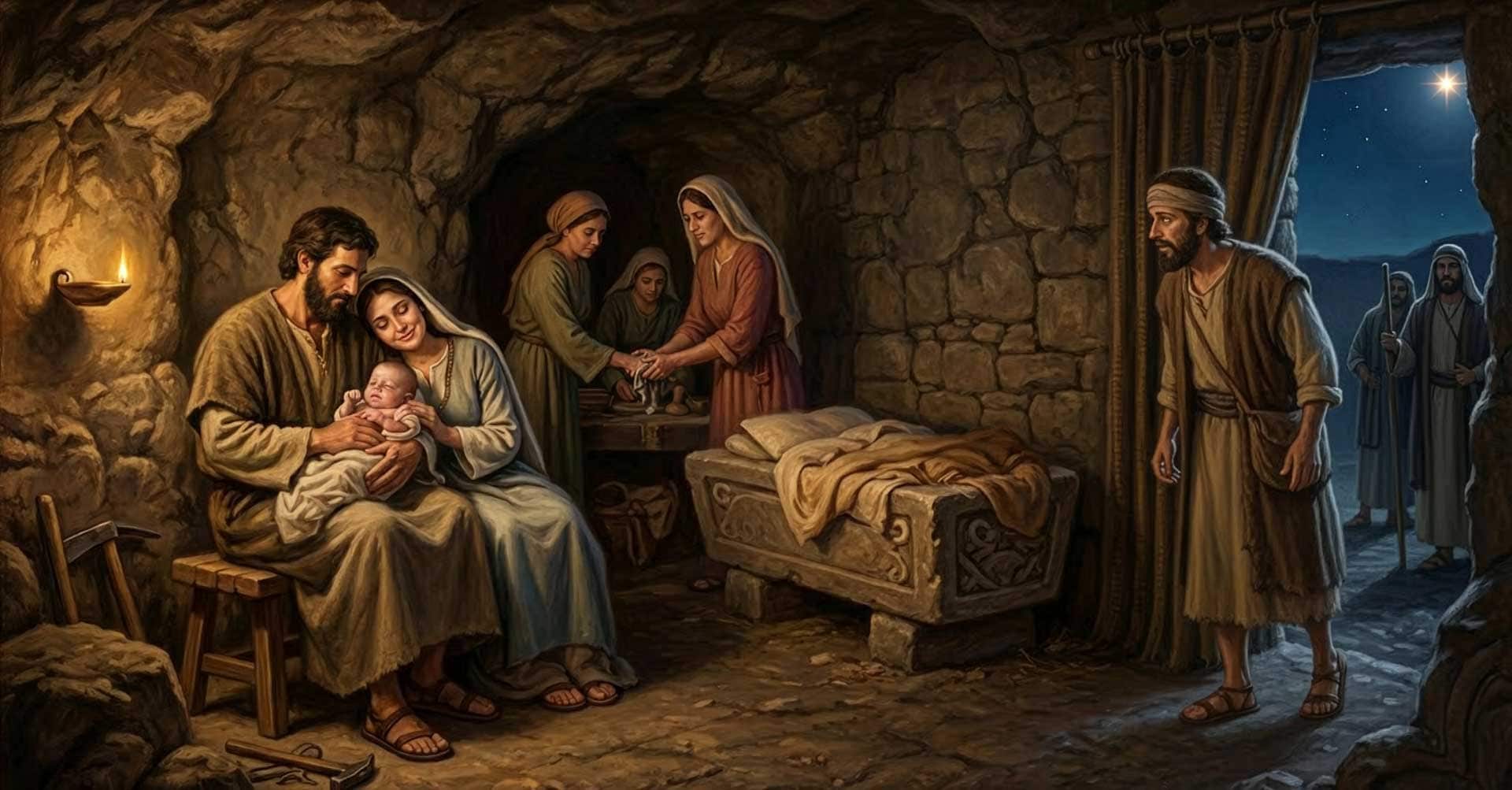
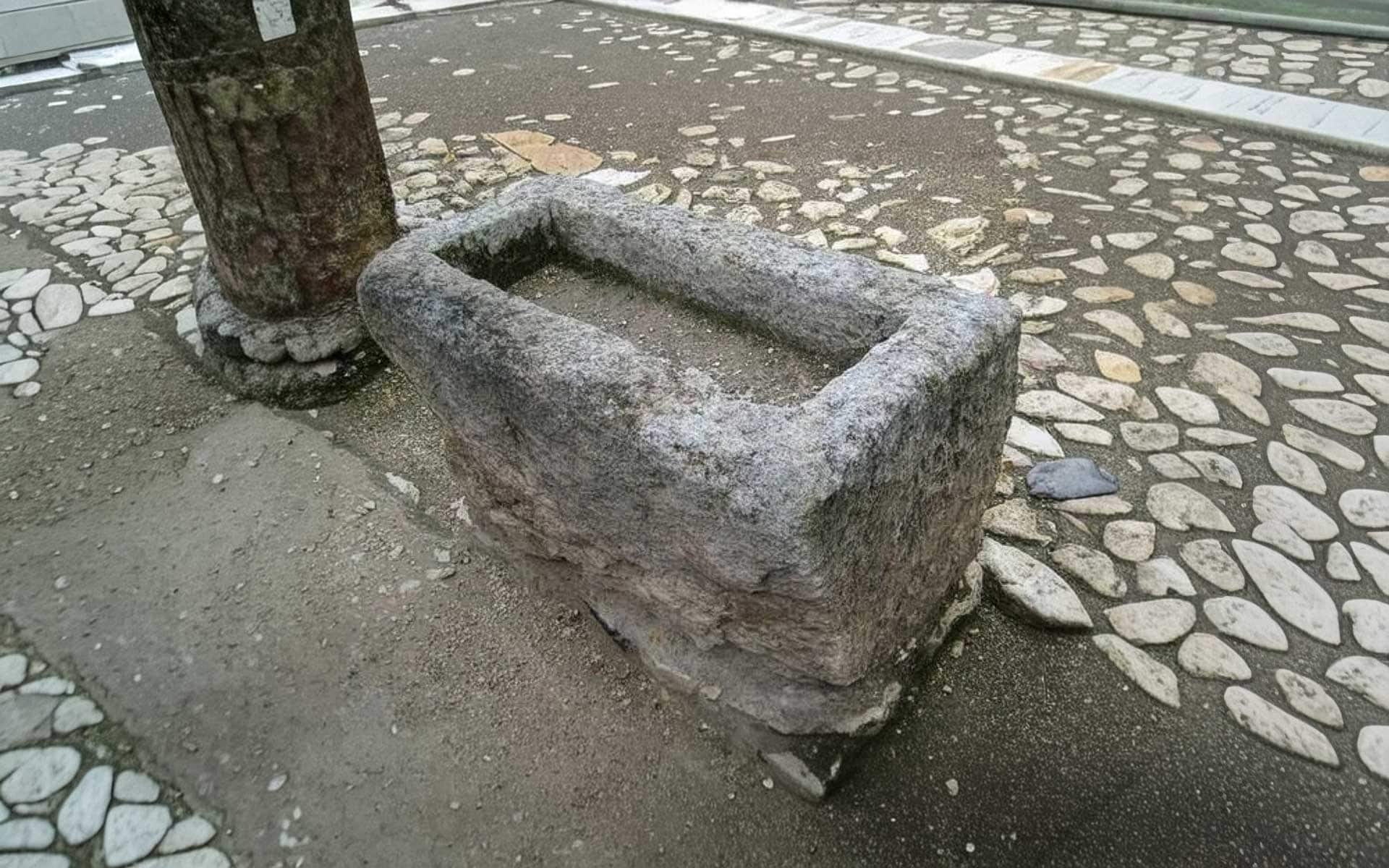
The manger was likely stone
The manger was most likely a stone manger because that’s what they used back then. They weren’t often used for feed because animals could usually graze year round. They were more commonly water troughs. As such a permanent and sturdy structure, they were often used for other things.
No stable mentioned: likely a grotto or cave setting
There was no stable mentioned, only a manger. Stables like we depict weren’t a Judean thing. That was a European assumption based off the manger. The locally recognized location for the birth is a grotto or cave on what would have then been the outer portion of town. We can’t be certain that’s the actual location but very likely the right kind of setting. Grottos were useful spaces used as auxiliary spaces, animal shelters, or storage, particularly on the outskirts of town. Some scholars speculate that they were living in the grotto while they built their home as was a known practice in some regions and is practiced in the region still today, much like someone living in an RV on their property while building their house. It’s not likely that they were sharing their space with animals when Christ was born.
Nothing says there were three wise men (Matthew 2)
Nothing says there were three wise men. The text only indicates that there were multiple Magi—at least two, possibly many. The number three comes from the gifts, not from the narrative itself, and three gifts do not imply three gift-givers.
The wise men did not come on the night Christ was born
The wise men did not come on the night Christ was born. Here’s what we know. The Christ Child was taken to the temple, which traditionally would have been about 40 days. After the temple presentation, they appear to have been residing in Bethlehem when the Magi arrived. After the wise men visited, they immediately fled to Egypt (Matthew 2:13–14). Herod called for the killing of infants under 2 years old (Matthew 2:16). That gives us a range of about 6 weeks to 2 years. We also know that the wise men came to visit Mary and Joseph in a house (Matthew 2:11). We can infer or speculate a little tighter timeline. Herod was an overkill kind of guy and likely thought he was much less than 2 years but was covering his bases probably making it between 6 weeks and a year.
Joseph was a Tektōn
“Is not this the ὁ τοῦ τέκτονος υἱός?” (Matthew 13:55) more accurately translates to “Is not this the son of the builder?” Joseph was a τέκτων (téktōn) or builder. That’s what we know. Tektōn is commonly translated to carpenter which we take to mean building things of wood which would have actually been a joiner. Wood was scarce in that region and as a Tektōn in that area, he likely worked much more with stone. Many of Christ’s later parables and symbols include stones and masonry references.
“While they were there, the days were accomplished that she should be delivered.” (Luke 2:6)
Luke does not say they arrived and Mary immediately gave birth. It does not say that they got there and Mary immediately gave birth. He does say she was great with child but not that she was full term. The scripture lends more to them being there for a time and “while they were there”, she gave birth.
Other typical nativity elements not found in the scriptures:
- Born at Night Nothing says that Christ was born at night. We put the birth at night because of the assumed days travel, the motel (inn), the star, and the shepherds. We already addressed the travel and the ‘inn’, the star is only mentioned regarding the wise men, and we don’t know how quickly the shepherds were notified but I would hope that Mary had a little recovery time before guests showed up.
- Donkey There is no donkey mentioned. They may have traveled with a donkey. We just don’t know.
- Mary gave birth alone with Joseph Nothing says that they were alone. Having returned to Joseph’s homeland, it’s likely they would have had family, friends, or midwives helping Mary through labor.
- Star over the manger Nowhere is it described that a star was over the manger. Wise men followed the star, shepherds did not (Luke 2:8–16).
Other scholarly SPECULATIONS:
- Spring Birth December 25 was a date chosen to mesh well with winter festivals. Many scholars put the date of his birth in the spring in March or April.
- Jewish men from the east? We know of one other Wise Man / Magi from the East. Daniel held such a station in Babylon hundreds of years prior but he also taught about Christ. SOME scholars speculate that these Magi were likely acting on knowledge passed down through wise men from Daniel. This is far from a consensus but it’s a fun possibility.
- Intentional Move Some scholars speculate that Joseph and Mary moved intentionally to Bethlehem, possibly with an awareness of its messianic significance from Micah 5:2, with the registration creating a clear record and legal connection for Christ coming from Bethlehem. So, while the registration was a decree, they may have chosen to move their family there. Motives are VERY unknown, HIGHLY speculative, and far from a scholarly consensus, but fun to think about.
All of that said, please enjoy all the less than historical portrayals of the Nativity as they seek to commemorate such a special event in the best way they know how.
Further Reading — Books & Major Works
Jeffrey R. Chadwick
- The Stone Manger: The Untold Story of the First Christmas — archaeological & historical reconstruction of the Nativity context.
Kenneth E. Bailey
- Jesus Through Middle Eastern Eyes: Cultural Studies in the Gospels — cultural/historical insights from a Middle Eastern perspective on Jesus’ life, including infancy context.
Raymond E. Brown
- The Birth of the Messiah: A Commentary on the Infancy Narratives in Matthew and Luke — comprehensive scholarly commentary on the Nativity accounts.
Joseph A. Fitzmyer
- The Gospel According to Luke I–IX (Anchor Yale Bible) — detailed scholarly commentary on Luke’s Gospel, including the birth narrative.
R. T. France
- The Gospel of Matthew (New International Commentary on the New Testament) — scholarly commentary including Matthew’s Nativity material.
Jerome Murphy-O’Connor
- The Holy Land: An Oxford Archaeological Guide (from Earliest Times to 1700) — archaeological context for sites like Bethlehem Gospel traditions (often cited with the Nativity in broader archaeological works).